Research published this week in the journal Environmental Research Letters (ERL) shows that the recent claims that meat and dairy industries are ‘climate neutral’ are misleading.
Are livestock industries ‘climate neutral’ as recently claimed in peer-reviewed research? Research published today by Dr Caspar Donnision and Dr Donal Murphy-Bokern in Environmental Research Letters reveals how subtle shifts in definitions combined with overlooking key facts can distort understanding to the point where significant emitters of greenhouse gases are presented as ‘climate neutral’. At the heart of the matter is methane. Because methane is a short-lived but very potent climate pollutant, declining emissions reduce warming as concentrations in the atmosphere decline. This is wrongly presented as a ‘cooling’ effect that offsets the warming effect of ongoing emissions from businesses resulting in ‘climate neutrality’. Like methane itself, the ‘cooling’ effect of reductions is temporary. The climate neutrality claims and the associated claimed alignment to the Paris Agreement overlook this. They are misleading and distract us from the urgent challenge of reducing emissions of all greenhouses gases from all sectors, including agriculture.
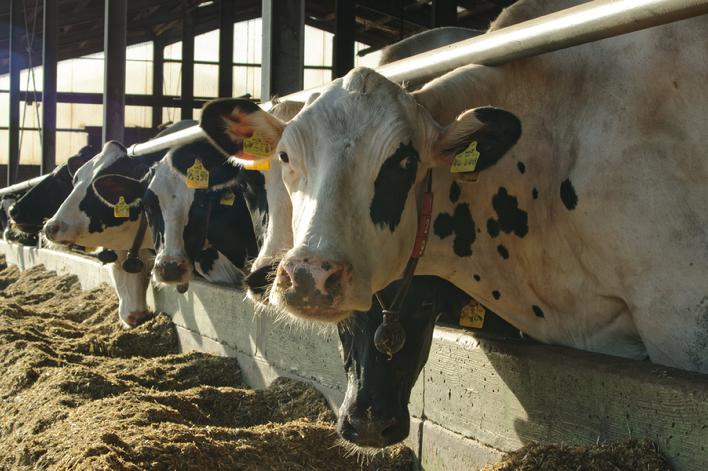
Intensive dairy cow feeding in northern Germany. Photo is free to use with credit: Donal Murphy-Bokern.
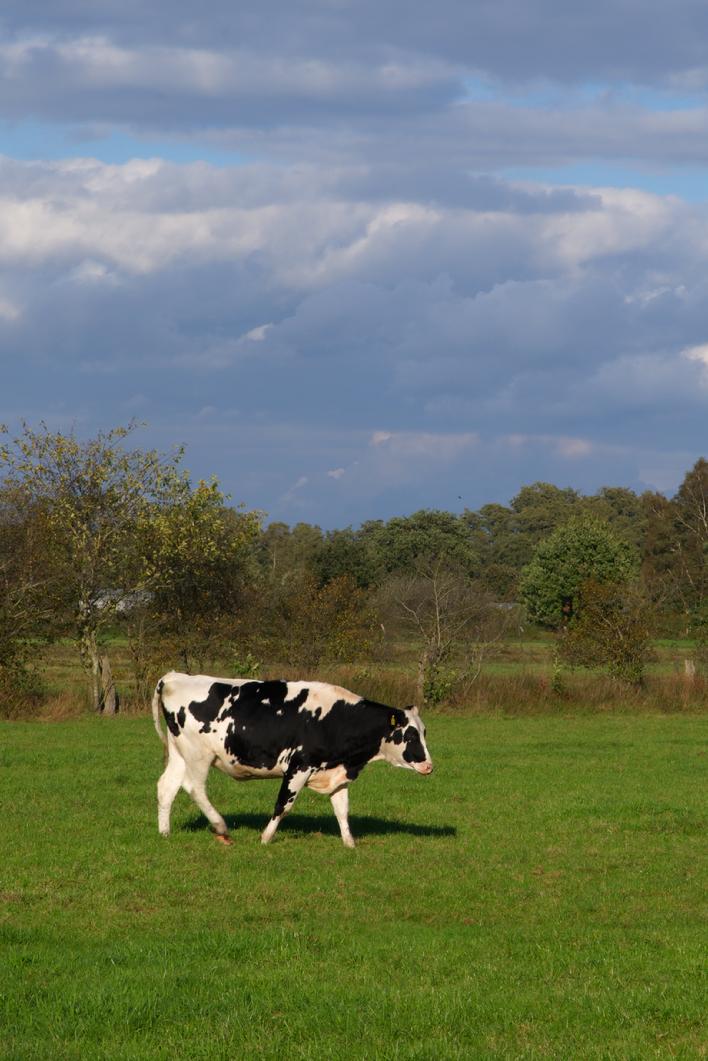
A heifer on grassland in northern Germany. Photo is free to use with credit: Donal Murphy-Bokern.
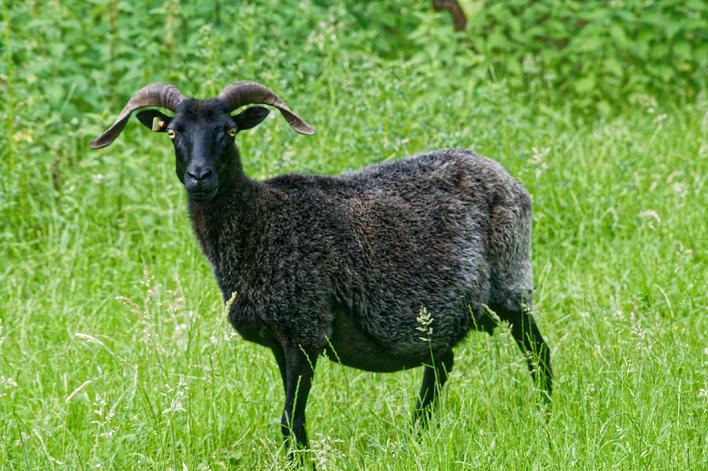
Extensive sheep grazing in northern Germany. Photo is free to use with credit: Donal Murphy-Bokern.
Legume Generation: Plant breeders and researchers collaborate for the next generation of legume crops to reduce the protein gap in Europe
(Kroge-Ehrendorf, Lohne, Germany). Following two years project planning led by Dr Donal Murphy-Bokern, the Legume Generation consortium met last week for the first time in-person to plan their work for the next five years, and to celebrate remarkable success.
We need better legume crops on European farms to help farmers meet Europe’s demand for plant protein and support a protein transition. Understanding this, fifty scientists and plant breeders participated recently in a meeting held at the Leibniz Institute of Plant Genetics and Crop Plant Research (IPK) in Gatersleben/Germany. Including Dr Donal Murphy-Bokern, they are all members of the Legume Generation consortium which has recently been awarded 7 million Euros from the European Union and the United Kingdom after being assessed by the EU as outstanding. The total value of the new project is 8.6 million Euros. Running from September 2023 to February 2028, Legume Generation aims to reduce the European protein deficit by boosting plant breeding to make legumes more productive and profitable for European farmers. The consortium is coordinated by Dr Lars-Gernot Otto at the IPK and Dr Donal Murphy-Bokern from Lohne in Germany.
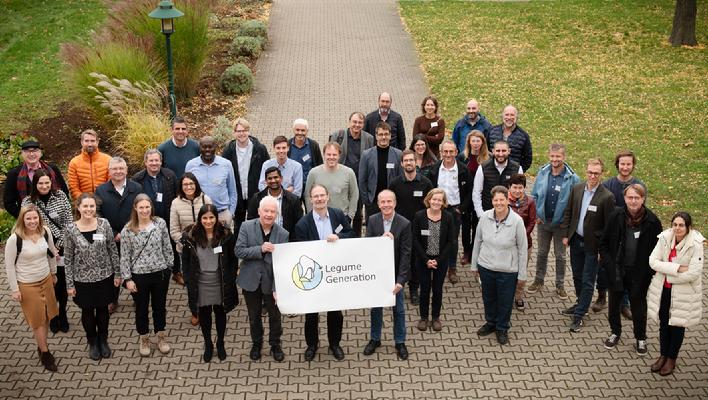
Members of the Legume Generation Consortium at the Leibniz Institute of Plant Genetics and Crop Plant Research (IPK) in Gatersleben Germany. Photo: J.-S. Himpe, (IPK).
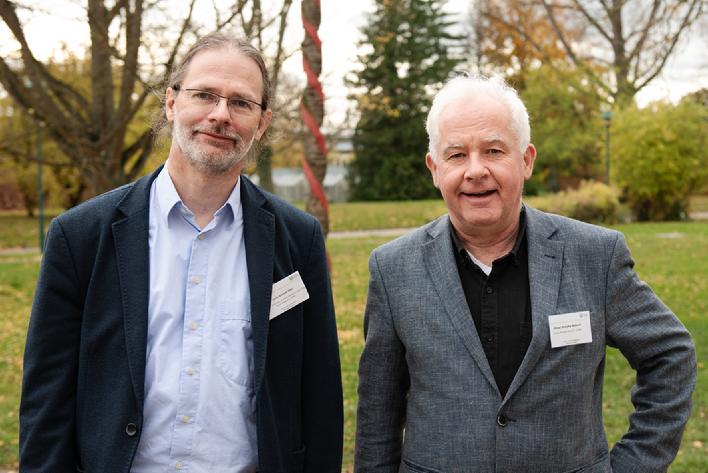
Dr Lars-Gernot Otto (IPK) und Dr Donal Murphy-Bokern at the Leibniz Institute of Plant Genetics and Crop Plant Research (IPK) in Gatersleben Germany. Photo: J.-S. Himpe, (IPK)
Two decades of EU Framework Programme research for Societal Challenge 2 examined
1 February 2018
Lohne and Brussels
Today, Dr Donal Murphy-Bokern addressed the 15th Programme Committee Meeting of Horizon 2020 Societal Challenge 2. He presented the report on a special study of how EU framework programmes since 1998 have addressed Societal Challenge 2: Food Security, Sustainable Agriculture and Forestry, Marine, Maritime and Inland Water Research and the Bioeconomy. The Programme Committee comprises senior representatives of the EU member states and associated countries. It is the charged with over-seeing the implementation of the SC2 programme and with the development of new Framework Programmes.
With Prof. Katerina Moutou (University of Thessaly) as co-chair, Donal Murphy-Bokern led a 10-person team to explore how EU framework programmes have addressed SC2. The primary purpose was to investgate new approaches to evaluation and to explore patterns in past programmes that are relevant to new programme planning. For the first time, the research and innovation projects in four framework programmes were systematically searched for how they align with SC2. A universal project typing framework based on impact pathways was developed and used to examine changes in the four framework programmes and features relevant to non-academic impact, especially through innovation in target sectors. A total of 2,305 projects were typed in relation to primary users, these users' activities, and project content. Patterns in a total of nearly 20,000 participations were also examined. Complementing the portfolio analysis, a Delphi survey of members of six identified impact communities was conducted. The main part of the report and two annexes are available here.
The report has also been published by the European Commission.
Donal Murphy-Bokern: "It was very encouraging to witness how members of the Programme Management Committee engaged with our report. It clearly impacted on their thinking. The portfolio analysis in particular showed the committee that the decisions they make and their approach to research portfolio development really matter."
The committee recognised the innovative approach taken by the study team that has revealed important programme features for the first time. They indicated a wish to consider the report further for their work in developing the next framework programmes.
The role of corporate social responsibility in reducing greenhouse gas emissions. Lohne, Germany 30 July 2015 A report on the impact of agri-food corporate social responsibility was published today by Donal Murphy-Bokern. The version published is a draft for public consulation and all are welcome to provide comment on it to Donal Murphy-Bokern. This study was conducted in 2013 and 2014 to examine the effect of corporate social responsibility (CSR) strategies and programmes on greenhouse gas emissions (GHG) from agriculture and food. Climate protection is subject to a profound market failure and this raises questions about the true commitment that can be made to climate protection in CSR strategies and the real effectiveness of resulting measures. An extensive academic literature on CSR exists, much of it using disciplines such as behavioural economics to examine the evolution, drivers and consequences of CSR. The effect of CSR on the corporate world, on consumer behaviour, on the role of governments, and even on democracy is debated. The purpose of the research reported is not to contribute to debate about the principles of CSR. Instead, this study addresses a practical question: are agri-food sector CSR programmes making an impact on greenhouse gas emissions? Firms’ own reports provided the primary evidence base, augmented by academic reports of mitigation approaches and progress. The challenge of reconciling the need to generate profit with the cost of reducing greenhouse gas emissions from food raises a number of practical questions that this study addressed: What type of corporate responsibility strategies are operating in the agriculture and food sector which are relevant to climate protection? How do the resulting measures impact on primary production (farming) where a very large number of suppliers are in competition with each other in commodity markets? How do these strategies impact on direct supply chain carbon dioxide emissions? How do these strategies impact on other GHG emissions, especially nitrous oxide and methane? What effect has CCR on land use change?In addition to examination of the reports cited, the firms studied were consulted on the early draft of this report. Donal Murphy-Bokern emphasised his appreciation for the time companies took to examine the findings and to provide additional data and comments.
The study reports that CCR has grown significantly in the agri-food sector in the last decade and that this trend is robust. Our overall conclusion is that considering the commercial constraints and the obligations of firms to shareholders, CCR is contributing to climate protection. These private sector efforts alone are not sufficient to achieve the far reaching change necessary if the agri-food sector is to contribute to climate protection in proportion to its contribution to emissions and the emission reductions required across the economy for climate stabilisation. However, the extent of CSR activities, their very rapid growth, and in particular recent efforts to standardize certification across whole sectors or countries combined with synergies with public sector regulatory activity means that CSR is now an important component of wider climate protection efforts.
Nitrogen pollution, climate and land use: what we eat matters.
Lohne, Germany and Den Haag, Netherlands.
An international team of agricultural and environmental scientists, including Dr Donal Murphy-Bokern of Lohne, announced the findings of research that for the first time shows how much our food choices affect the nitrogen cycle, greenhouse gas emissions, and land-use across Europe. The research is published in Global Environmental Change.
The production of our food and the nitrogen cycle upon which all life depends are very closely linked.However, our distortion of the nitrogen cycle to boost food production results in consequences that is now causing widespread concern: nitrates in water, ammonia emissions damaging sensitive ecosystems, and increased emissions of nitrous oxide which is a very potent greenhouse gas.About 80% of out nitrogen pollution is due to the production of meat, milk and eggs.A group of European scientists have just published the results of research that has examined the question: What would be the large-scale consequences for the environment and human health if consumers in an affluent world region such as Europe were to replace part of their consumption of meat, dairy produce and eggs with plant-based foods?
Report lead author Henk Westhoek, program manager for Agriculture and Food at PBL (the Netherlands Environmental Assessment Agency) said, “The report shows that if all people within the EU would halve their meat and dairy consumption, this would reduce greenhouse gas emissions from agriculture by 25 to 40%, and nitrogen emissions by 40%.The EU could become a major exporter of food products, instead of a major importer of for example soybeans.”
European Parliament publishes study on the environmental effects of protein crops
Today, the European Parliament released the report entitled "The environmental role of protein crops in the new Common Agricultural Policy".
The contract for the study, which was commissioned by the Parliament to examine potential reform measures relevant to legume crops, was awarded to Legume Futures team members Peter Zander, Moritz Reckling, Sara Preisel and Andrea Bues (ZALF), Tom Kuhlmann (Wageningen), Christine Watson and Kairsty Topp (SRUC), Fred Stoddard (Helsinki) and Donal Murphy-Bokern.
Today's publication follows the team's presentation of the study to the Parliament's Agricultural and Rural Affairs Committee on 25 April.
The study reviewed the scientific evidence about the environmental effects of protein crops. All protein crops are legumes, and so the study focused on grain legumes. The study theme is framed by the Commission’s proposals for the reform of the CAP that are currently the subject of debate between the European Parliament, the European Commission and the Council of Ministers.
This work for the Parliament built directly on the wider and longer-term Legume Futures research work. Peter Zander (ZALF) who led the study: "This contract enabled us to extract the knowledge relevant to the CAP reform process and focus it on the needs of policy-makers now. We were able to engage intensively with the reform process as it unfolded drawing on the work in Legume Futures but also adding additional analysis for the specific needs of the Parliament.”
Donal Murphy-Bokern played a major role in the design of the study and the synthesis of the scientific information into the report aimed at the European agricultural policy community: "We said in our proposal to the European Parliament that we would produce a report to support debate in this policy community. The response we've received so far indicated we have achieved this, and we will continue to do so".
Empowering decision-makers by providing understanding of the key processes in a balanced and objective way was a guiding principle in conducting the study. The team gave priority to conveying an understanding of the key processes, impacts and policy options. Christine Watson (SRUC): "Even though the policy positions of the Commission and Parliament may differ, it was clear from the debate following our presentation at the Parliament that both institutions appreciated the understanding of key processes conveyed in our report".
Background
In line with the increasing role of the European Parliament in EU legislation under the Treaty of Lisbon, the Parliament is strengthening its role in evidence-based policy development. This involves supporting the co-decision process with applied policy research and studies. This study was established by the Parliament using a competitive procurement process. The official reference is:
Service contract IP/B/AGRI/IC/2012-067 "The environmental role of protein crops in the new Common Agricultural Policy".
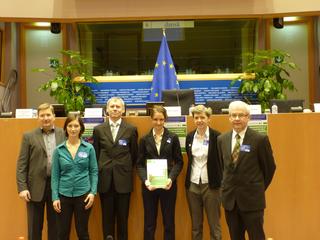
Members of the study team at the European Parliament: L to R Peter Zander (ZALF), Sara Preissel (ZALF), Fred Stoddard (Helsinki), Andrea Beus (ZALF), Christine Watson (SRUC), and Donal Murphy-Bokern.
Brussels, 25 April 2013.
Presentation to the Agriculture and Rural Development Committee (COMAGRI) of the European Parliament.
Today, Dr Donal Murphy-Bokern with colleagues from the The Leibniz Centre for Agricultural Landscape Research (ZALF), the University of Helsinki, Scotland's Rural College, and the University of Wageningen presented their report on the environmental role of protein crops in the new Common Agricultural Policy to COMAGRI (The Agriculture and Rural Development Committee) of the European Parliament.
Proposals to support the production of protein crops, which are all grain legumes, have featured prominently in public debate about the reform of the Common Agricultural Policy.
This study was conducted for the European Parliament in early 2013 during an intense phase of the political debate about the future of the Common Agricultural Policy. The purpose is to assess the potential environmental effects of an increase in the cultivation of protein crops in the EU and to formulate a set of policy measures that could be applied under the new CAP to gain environmental benefits from increased cultivation of protein crops by EU farmers.
The background is the EU’s dependence on imported protein crop commodities and the reduced cropping diversity on European farms. The EU now imports 70% of its requirement for high-protein crop commodity which in 2011 accounted for about 14% of the world-wide production of soya bean, and using about 15 M ha of arable land outside the EU. This deficit has grown mainly because of the increased demand in Europe for high-protein feed for livestock production, particularly of pigs and poultry.
Donal Murphy-Bokern: "I was particularly pleased to hear the debate between the MEPs and the representatives of the European Commission. While their position on protein crops may differ, it was clear that all recognised the insight and objectivitivity in our report. Our aim is to inform and empower public debate with undersztanding of the issues, and I think we have achieved this".
Background
In line with the increasing role of the European Parliament in EU legislation under the Treaty of Lisbon, the Parliament is strengthening its role in evidence-based policy development. This involves supporting the co-decision process with applied policy research and studies. This study was established by the Parliament using a competitive procurement process. The official reference is: Service contract IP/B/AGRI/IC/2012-067 (Study "The environmental role of protein crops in the new Common Agricultural Policy"). The report will be published by the European Parliament.
At the
University of Helsinki, leading crop scientists who attended the 12th Congress of the European Society for Agronomy (ESA) confirmed that agronomic measures such as support for greater crop diversity can be used in CAP reform to improve the environmental performance of cropping systems. In a formal statement, they acknowledge that getting an environmental dividend from support payments inevitably means influencing and changing how farmers manage their land. However, they say that the only proposed measure directly affecting agronomic practice (‘diversification’) will not deliver significant environmental improvement over most of Europe’s main cropping areas. The development of their and their scientific discussions about the reform proposals were coordinated by Dr. Donal Murphy-Bokern.
The European Union pays farmers on average about 269 Euro per hectare per year in direct aid. A set of proposals (the so-called ‘greening proposals’) to link these payments to the increased protection of the environment while preserving and enhancing food production has been provided by the European Commission. Three measures to change how agricultural land is managed have been proposed. One concerns crop ‘diversification’ and focuses on the range of crops farmers grow.
The benefits of growing a range of crops, particularly in rotation, have been known for centuries and the findings of pioneering agronomists hundreds of years ago are still valid today. On the typical arable farm, growing a diverse range of crops in rotation brings benefits for biodiversity, reduces reliance on fertilisers and pesticides, and improves the soil supporting high productivity in the longer term. The range of foods produced also increases. However, the Congress warns that the ‘diversification’ measure as proposed will not significantly influence farm practice and therefore is not going to effectively support the overall ‘greening’ goal. ‘Diversification’ is the only in-field agronomic measure proposed.
The scientists call for recognition of the diversity of agro-ecological zones in Europe. A ‘one-size-fits-all’ approach constrains the development of measures that effectively support the sustainable development of European farming. The Commission should aspire to develop flexible but demanding agronomic measures that target regional environmental challenges and opportunities. Specifically, they draw attention to the weak effect of the diversification proposal and urge recognition of the benefits of growing different types of crops in rotation in most of Europe’s main crop producing regions. The scientists urge greater recognition of the well established benefits of taxonomic (e.g. different plant genera) and agronomic diversity and note that the proposed diversification measure neither promotes that diversity, nor requires the rotation of crops, although many resource-protection and environmental benefits of crop diversification in annual cropping systems depend on it. They call for incentives for crop rotations that provide long-term agronomic and economic benefits.
Dr Fred Stoddard, the Society’s President, summarises the views of members at the Congress: “The Commission is right to seek to changes in agronomic practices if it is to ‘green’ the CAP, but the only measure that targets agronomic practice is unlikely to substantially change practice on most of Europe’s arable farms. With the exception of some cereal-growing areas of the Mediterranean and some farms that are heavily specialised in growing maize, few mainstream arable farming systems have more than 70% of the area allocated to one species. On typical arable farms, crop diversification brings benefits only when different types of crops are grown in rotation – the proposal fails to support these key features”.
Dr Donal Murphy-Bokern from Germany provided some historic perspective: “This is the first reform to propose a specific agronomic measure affecting in-field crop production practice to deliver public benefits. So it is particularly appropriate that the biannual congress of the European Society of Agronomy contributes to the debate. Obviously, there is opposition from some agricultural interests to changes that require farmers to deliver environmental benefits – but reform by definition is about change and the need for reform is a political reality”.
While debate about crop diversification rages in political circles, the scientists who study cropping systems have so far not expressed a collective scientific opinion. It seems that everyone in the agricultural policy community is involved in the debate about this agronomic measure except Europe’s agronomists and this Statement changes that” said Dr Christine Watson from Scotland. “Our position is a scientific one – we are saying that changing cropping patterns, especially through rotating different types of crops, will support the overall goal. However, our knowledge and experience as agronomists tells us that this proposal will fail to require such change on most of Europe arable farms”.
BACKGROUND
The European Society for Agronomy (ESA) (www.european-agronomy.org) is a scientific society created in 1990 with the aim of promoting the science of agronomy and its use in agriculture and rural development across Europe. It has more than 300 members from all countries of the European Union.
CAP reform and ‘diversification’.
The proposals to reform the Common Agricultural Policy of the European Union were published on 12 October 2011. They set out the European Commission’s plans for reforming how farming is supported with public money across the EU post-2013. This reform represents a further step in a process that started in 1992. Having introduced a single farm payment that is ‘decoupled’ from production in 2003, the Commission proposes that 30% of these direct payments to farmers (which in total average 269 Euros/ha/year) be made in return for improvements to the environment and protection of natural resources. Through this so-called ‘greening’ of direct payments, the Commission hopes to combine viable and diverse food production with improvements to soil, air, water and climate protection. The ‘diversification’ measure sets out that on most farms, one species (e.g. wheat or maize) should not account for more than 70% of the cropped area and that at least 3 crop species should be grown with none less than 5%. The Congress was critical of this ‘one-size-fits-all’ approach pointing out in addition that it does not require rotation of crops and that the 70% threshold is already met by most farmers in Europe’s main crop producing areas.
The proposals are currently the subject of intense political debate at European level involving political institutions, farm organisations and Non-Governmental Organisations. The reform package as a whole will be decided on by the Council of Agricultural Ministers and the European Parliament.
The German subvention of bioenergy through the Renewable Energy Law is counter-productive
Dr Donal Murphy-Bokern and representatives more than 30 Citizens’ Initiatives across German (Initiativen mit Weitblick) today met Niedersächsen’s Environment Minister Hans-Heinrich Sander. The meeting was prompted by Minister Sander’s leading role in the revision of Germany’s Renewable Energy Law.
Minister Sander expressed his great concern at the boom in food (maize) fuelled biogas production in Germany and a determination to do all he can to reduce the subsidisation of biogas from food resources. He also expressed great irritation at the biogas sector's misrepresentation of his position. Further details are presented by the Initiaiven mit Weitblick press release www.initiativen-mit-weitblick.de.
After an in-depth and productive discussion in which the Minister expressed support for the aims of group, it was agreed that the Ministry and the group would work closely together to ensure each is well informed of developments.
Biogas and Climate presentation in Damme
Later this evening, Dr Donal Murphy-Bokern presented a talk on the science and politics behind the use of food crops for biogas. His presentation was based on international peer-reviewed research results and scientific consensus.
The main points were: The German policy of subsidising the use of arable food crops for bioenergy (including biogas) is fundamentally flawed. In assessments of direct effects, bioenergy systems based on arable food crops such as maize perform poorly in terms of greenhouse gas mitigation per hectare within the bioenergy system. This result in unacceptably high greenhouse gas mitigation costs for society.
However, the balance get much worse when wider indirect effects are considered. The effect of widespread use of arable land for bioenergy has profound consequences at the global scale adding to pressures on land use change, for example deforestation in South America or destruction of grassland in Europe. This replacement of arable land lost to food production when food resources are used for bioenergy can easily lead to greenhouse gas emissions that exceed those saved by the bioenergy system. In his presentation Dr Murphy-Bokern drew on research from across the world and on the scientific consensus now being expressed world-wide that the subsidised expansion of food-based bioenergy is counter-productive in terms on climate protection. Notes: Dr Donal Murphy-Bokern is an independent agricultural scientist based in Lohne in Germany. He leads international research projects, contributes to the direction of international agricultural research programmes, and works as a specialist in public policy within international research teams. The overall aim of his work is the development of resource conserving and efficient agricultural systems for food, bioenergy and renewable materials.
Climate-friendly food consumption reduces farmland needs and has other substantial benefits Research from Cranfield University and Murphy-Bokern Konzepte published today by the UK Committee on Climate Change identifies clear potential benefits of reductions in meat and dairy consumption. Adopting climate friendly diets not only reduces greenhouse gas emissions, it has other potential environmental benefits with the low risks of unwanted side-effects. Such change is also widely regarded as beneficial for health. Food accounts directly for about 20% of greenhouse gas emissions from developed economies. This increases to about 30% when the effects of agriculture on global land use change (e.g. deforestation) are considered. Since the Cranfield University team published detailed analyses of the emissions from food production in 2006, it has become widely recognised that a reduction in livestock production consumption is central to consumption-led climate change mitigation. A large proportion of British meat and dairy products are produced from grassland. The background to the research is the question of the effect of replacing meat and dairy products with plant based products on the total amount of cropland needed. An increase in the demand for crops overall would be a negative effect causing increased emissions through the conversion of land to crop production or the ‘export’ of emissions to other countries. The work developed and used a combination of consumption and production scenarios to examine potential consequences of consumption and production change. Life-cycle assessment techniques were applied to these scenarios to examine the overall effects. The production under the various consumption scenarios was allocated to agricultural land resources by a combination of survey-based data analysis and model-derived calculations. Changes in the structure of the livestock sectors were simulated. Land use change (LUC) emissions (from changing soil C and biomass stocks) were calculated. The research process included the participation of industry stakeholders in the design of the scenarios tested and in the scrutiny of results and conclusions. Major results
1. All consumption changes to reduce greenhouse gas emissions reduced the total amount of land estimated as required to support the UK food system. When livestock consumption is reduced, the amount of extra land required for the increased direct consumption of plant products is less than the amount of arable land released from livestock feed production. 2. Reducing livestock consumption reduces the need for all types of land, both in the UK and abroad. 3. Replacing beef and sheepmeat with pig and poultry meat increases the need for arable land, especially outside the UK. However, the release of good quality grassland in the UK exceeds the increase in overseas arable landed needed. 4. Consumption change has huge implications for the need for agricultural land, especially grassland. Up to half of land now used for food in the UK could be released for other purposes (including exports) if the UK consumption of livestock products was reduced by 50%. The reduction is mostly in grassland. 5. The effect of converting grassland released to bioenergy production depends greatly on the type of crop grown. Using this land for maize (e.g. for biogas), oilseed rape (for diesel) or wheat (for bioethanol) causes very large emissions of carbon dioxide from soils in the first twenty years causing an increase in greenhouse gas emissions. Using unwanted grassland for forest or other types of woodland such as short-rotation coppice will has the opposite effect – carbon is captured in soil reducing emissions. These effects are very large. 6. Reducing livestock also reduces other types of pollution such as nitrate to water and ammonia to air. 7. Much of the land released from agriculture is relatively unproductive grazed land. The dramatic reduction in the use of this land for livestock opens up opportunities for changing land use for other purposes, including rewilding. 8. A 50% reduction in livestock product consumption is feasible and aligns with healthy eating advice.
This study has clearly shown that UK land can support consumption change to reduce greenhouse gas emissions from the food system. The reduction in land needed to supply the UK that comes with a reduction in livestock product consumption brings potential environmental benefits and significant opportunities to deliver other products, including other ecosystem services, from UK agricultural land. The study has shown that some risks currently argued as arising from consumption change are small. In particular the study shows that arable land needs will not increase if the consumption of livestock products is decreased. The risk that emissions will be exported is also shown to be small. The identification of the significant potential benefits of consumption change combined with the low risks of unintended consequences has far-reaching implications for guidance to consumers and the development of agricultural policy. The results are broadly applicable to other European countries which means they are relevant to international policy development, for example the reform of the Common Agricultural Policy.
Comments on the study The research has been warmly welcomed. Tara Garnett from the Food Climate Research Network at the University of Surrey called the report “a really fascinating piece of work”. Mike Thompson of the Committee on Climate Change described the research as “an impressive piece of analysis that carries forward the Committee’s thinking around diets and climate change mitigation”. Commenting as one of the authors, Dr Donal Murphy-Bokern said that the Cranfield team has always very carefully applied powerful mathematical techniques and models to complex questions about resource use in agriculture. This study is at the cutting edge in how land needs and greenhouse gas emissions for food production are modelled. He said that, like many who have reviewed the work, he is continuously astonished at the depth of the analysis and by the profound implications the numerous results. He also added that while focused on the UK, the work has important international implications. The conclusions are broadly transferable to other EU countries. The report can be downloaded here: http://www.theccc.org.uk/reports/fourth-carbon-budget/supporting-research
Citation: Audsley, E., Chatterton, J., Graves, A., Morris, J., Murphy-Bokern, D., Pearn, K., Sandars, D. and Williams, A. (2010). Food, land and greenhouse gases. The effect of changes in UK food consumption on land requirements and greenhouse gas emissions. The Committee on Climate Change. Notes: Dr Donal Murphy-Bokern (www.murphy-bokern.com) is an independent agricultural scientist based in Lohne in Germany. He leads international research projects, contributes to the direction of international agricultural research programmes, and works as a specialist in public policy within international research teams. The overall aim of his work is the development of resource conserving and efficient agricultural systems for food, bioenergy and renewable materials. The Department for Natural Resources at Cranfield University (http://www.cranfield.ac.uk/sas/naturalresources/index.html ) is a recognised world leader in the analysis of natural resource use in agriculture. In addition to being home to the UK National Soil Resources Institute, the report’s authors are world leaders in the application of life-cycle assessment to agricultural products and systems.
The United Kingdom Committee on Climate Change (CCC) is an independent body established under the Climate Change Act to advise the Government on emissions targets, and to report to Parliament on progress made in reducing greenhouse gas emissions.
February 12, 2010 - Study on the carbon footprint of UK food gets headlines
The WWF UK and the Food Climate Research Network have published a report from Cranfield University, Donal Murphy-Bokern and Ecometica examing the carbon footprint of the UK food system and scope for reductions.
The study shows that food accounts directly for one fifth of UK consumers' carbon footprint. It includes the first detailed audit of the whole of the UK food carbon footprint, including emissions overseas embedded in imports. The study also used new techniques to allocate a proportion of the world's deforestation emissions to UK food. This increases the food carbon footprint to 30%.
The carbon footprint of UK food is dominated by emissions from the livestock sector. Livestock products directly account for 58% of emissions while providing less than a third of UK food in terms of food energy. Reducing livestock consumption offers the single most effective way of reducing the carbon footprint of our food consumption.
This report is a scientific report for public policy. It shows that radical change will be required if food production is to make a contribution to wider climate policy. This will involve combining different approaches from farm to bin. Decarbonisation of the wider economy will help reduce food chain emissions, but changes to consumption and to farming are also required. The report identifies reductions in livestock product consumption, including vegetarianism, as central to delivering a low carbon food system. For consumers, the desired direction of travel for reducing emissions is clear - eat less meat and dairy products. This must be combined with other measures, including using science and technology to improve farming.
As a balanced scientific report for policy development it also discusses potential unintended and undesirable consequences of a move in this direction so as to ensure we get the best out of a low livestock product diet. Consumers reducing meat and dairy can improve the benefits further. A low impact diet is a balanced diet - lower in livestock products than the average UK diet today, with more of a wide range of plant foods - cereals, fruit and vegetables. There is widespread consensus that this change in consumption is in line with health guidelines.
As we tackle climate change over the next 40 years, reducing the consumption of livestock products in the developed economies will play an increasingly important role in helping us cope with the feeding 9 billion people adequately and fairly.